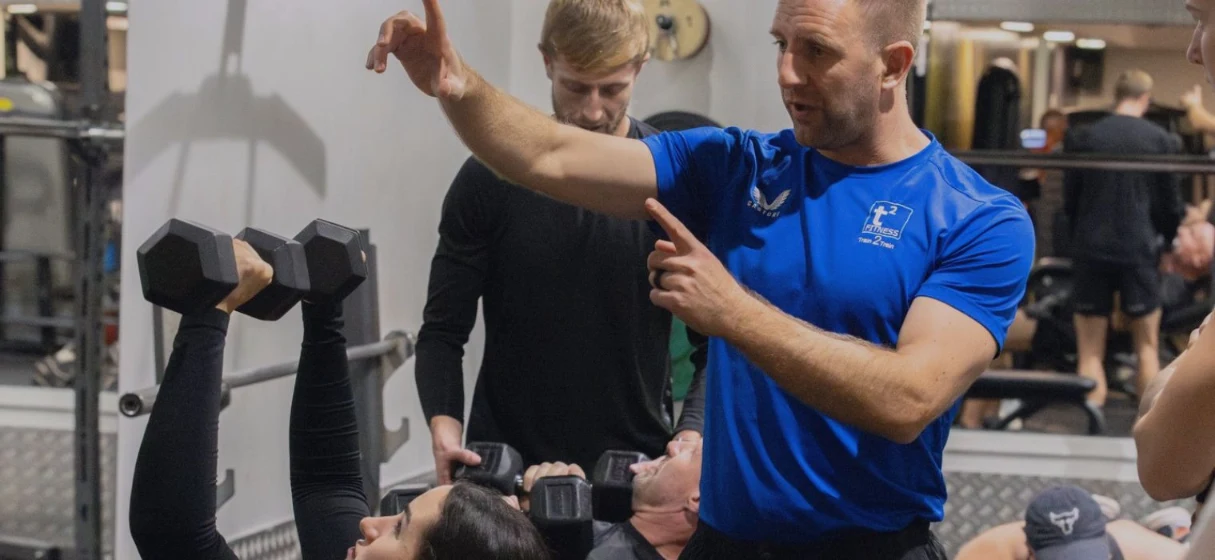
Starting a career in fitness is exciting! However, the first step – choosing the right PT training course – can be really overwhelming. With so many training providers, flash deals, courses, and promises out there, it’s hard to know where to begin. I’ve been in this industry since 2000, and running T2 Fitness Education since 2011. And over the years I’ve seen people make decisions that set them back before they even start.
My goal is to help you make smart choices so that your first steps into the fitness world are strong, safe, and set you up for a career you’ll love. With this in mind I’ve broken it down into 11 key areas you should look at before signing up for a PT training course. It’s based on real experience and questions and I get asked every day. Let’s go!
1. Know why you want to become a PT
It sounds obvious, but it’s worth asking yourself: why do you want this career? Do you love helping people with their health and fitness? Are you interested in teaching classes, training one-to-one, or maybe even working online?
Knowing your “why” will shape which PT training course suits you best. Not every course fits every goal.
2. Start With the Basics
The first thing you need to understand is what a personal training qualification is supposed to give you. A Level 2 Fitness Instructor qualification teaches you the fundamentals. You’ll learn how to work with clients safely, plan sessions, and understand the basics of anatomy and movement. The Level 3 Personal Trainer certificate builds on that foundation and gives you the skills to deliver one-to-one coaching, run group sessions, and even start your own business. And to be a Personal Trainer, you need both. These can be taken separately or together which is also known as the Level 3 PT Diploma.
It might sound obvious, but the wrong course won’t prepare you to actually work with clients. Some providers focus too much on ticking boxes for assessments and not enough on real world coaching. The right course balances knowledge with hands-on practice, so you leave feeling confident, not just qualified.
Some people ask, “Can I just jump straight into a Level 3 course?” The short answer is no. Most PT training courses require a Level 2 Fitness Instructor qualification first. That foundation ensures you understand basic anatomy, exercise principles, and how to work safely with clients.
Starting with Level 2 is not a hurdle. Instead, think of it at your first step to building a strong career.
- Face-to-face
- 5 Days
- Focus Awards
Level 2 Gym Instructor Course
- Face-to-face
- 5 Days
- Focus Awards
Level 3 Personal Trainer Course
- Face-to-face
- 14 Days
- Focus Awards
Level 3 Personal Trainer Diploma
3. Look at Accreditation & Industry Recognition
This is non-negotiable. Accreditation guarantees that your qualification is recognised and respected in the fitness industry. Without it, you might struggle to get work (especially in gyms) or progress to advanced courses.
When choosing a PT training course, check that it’s approved by a recognised awarding body such as YMCA, Focus Awards, or Active IQ. These courses will have met specific standards in content, delivery, and assessment. Beyond that, CIMSPA (the Chartered Institute for the Management of Sport and Physical Activity) approval shows that the provider is audited and trusted in the industry.
So, make sure you choose a course with national recognition. Check out our in-depth guide to awarding bodies, accreditations and qualifications in the Fitness Industry.
4. Consider the Course Format
There’s no one-size-fits-all when it comes to learning. Some people thrive on fully online courses, others need a mix of in-person training. Another factor that may influence your decision is whether you have the capacity to travel to a course, or able to take the time off from work.
At T2 Fitness, we offer both online and blended learning options. Online learning lets you study at your own pace, submit worksheets, and complete theory in your own time. Blended learning adds practical workshops, so you can practice coaching under the guidance of experienced tutors.
When you compare providers, think about how you learn best. Will you benefit from face-to-face guidance, or are you disciplined enough to study entirely online? Make sure the format fits your lifestyle, not just the provider’s schedule.
- Online courses give you flexibility. You can study in your own time, fit it around work or family, and revisit content whenever you need.
- Blended learning combines online study with practical workshops. This gives you the hands-on experience you need to feel confident when training clients.
- Face-to-face courses offer the most immediate practical support, but you’ll need to commit to the schedule.
Choose a style that suits your learning preferences and lifestyle.
5. How Long Should PT Training Course Take?
Some providers promise you can qualify “almost overnight,” but here’s the truth! It takes time to learn the content properly. Level 2 and Level 3 courses cover essential knowledge, practical skills, and assessment preparation. Rushing through risks leaving you underprepared and unconfident when you start working with clients. Although our face-to-face courses are intensive (one week study for Level 2 and one week study for Level 3), it’s not until you start working as a Personal Trainer that you training really begins. It’s only in real-world application of your training that you’re experience and knowledge and grow.
Think of it like learning to drive. Passing the test doesn’t make you an expert. It’s merely a licence to carry on gaining experience on your own. And that is the only way to develop your skills. Take the time to study and practice properly, and you’ll be ready to step into the industry with confidence.
6. What Good Support Looks Like
A quality course doesn’t just hand over content and leave you to it. Tutors should be accessible, experienced, and ready to provide feedback on both theory and practical work. They should guide you through assessments and help you understand how to apply what you’ve learned in the real world.
At T2 Fitness, we focus on supporting you every step of the way. Whether it’s answering questions, giving practical tips, or helping you prepare for your practical assessment, you should feel like you’re in capable hands.
Similarly, the support shouldn’t end once you’ve qualified. You want access to career advice, mentoring, and the chance to ask questions after you finish.
At T2, we provide lifetime support. Graduates can call, email, or return to redo elements of the course if needed. Your career is a journey, not a single day, and it’s one of the reasons we’re award winning and we’ve achieved the “enhancing status” from CIMSPA: in recognition for the high quality in teaching and support that we give to each and everyone of our students.
7. Beware of "guaranteed jobs”
If a course promises you a job immediately after qualifying, think carefully. No one can guarantee employment. Partnerships with gyms may offer interviews or placements, but ultimately, your career depends on the effort you put in.
However, once you’ve obtained your Level 2 and Level 3 qualifications, the world is your oyster. You might want to work in a gym, launch your own business, specialise in prenatal or postnatal training, or work with rehabilitation clients with special populations.
A good provider will not only get you qualified but also guide you toward opportunities give you realistic information about earning potential, provide ongoing mentorship, and help you understand how to grow your career over time. This long-term support is what separates a course that sets you up for life from one that simply gives you a certificate.
8. Choose a Provider That Really Cares
Your tutors make all the difference. Experience, quality, passion and transparency are key. Look for tutors with real industry experience, courses with practical training, and providers who won’t overpromise. Ask about their experience. Have they worked on gym floors? Do they have years of teaching and industry knowledge? A genuine team will answer your questions honestly, explain what to expect from the course, and care about your long-term success.
Check their industry partnerships, see if they offer continued learning, and make sure their courses are regularly updated to match current standards. At T2 Fitness, every tutor has decades of experience, both in education and practical application. You want someone who can guide you confidently, answer your questions, and give constructive feedback.
9. Why Community Matters
Starting your career isn’t just about the course content. Being part of a network of trainers, graduates, and mentors is invaluable. You learn from peers, get advice when you’re unsure, and can reach out to tutors even after you’ve qualified. Courses that connect you with peers, tutors, and industry professionals add huge value. Networking events, workshops, and online communities give you insight and support that you can’t get from a certificate alone.
At T2 Fitness, joining our courses means joining a community that’s been growing since 2011. You inherit that network immediately, and it becomes a resource you can rely on throughout your career.
10. Ask about CPD Options
Continuous professional development keeps your skills fresh and relevant. The right PT training provider should offer short courses, one-day workshops, and advanced qualifications. This helps you stay current and opens new career opportunities. We have a huge range of CPD courses and advanced courses that focus on developing specialist skills Reformer Pilates, Sport Message Therapy and Strength and Conditioning Training.
11. Assess The Culture
It’s easy to be lured in by flashy marketing, big promises and bold claims. But this can be misleading. Think critically. Look beyond fancy adverts. Ask questions, check accreditations, read reviews, and trust your instincts. Quality education beats marketing every time. Similarly, think about the culture of the place. Is there a sense of community? Do the tutors care about your success? Are you joining a supportive network? A PT training course is so much more than simply gaining knowledge. It’s about being part of a professional family that wants to see you succeed.
Final Thoughts
I know that choosing a PT course isn’t easy. But remember that choosing the right personal training course is about more than price or speed. It’s about accreditation, practical experience, support, and long-term career potential. Take your time, ask the right questions, and pick a course that sets you up to be confident, capable, and successful.
If you want to talk through your options, feel free to reach out. I’m always happy to give guidance and help you pick the path that suits you best. Your first step into the fitness industry is important. So, make it count!