How to be Become a Personal Trainer in the UK (Guide for 2026)

Becoming a personal trainer is one of the most rewarding ways to turn your passion for fitness into a real career. But if you’ve started looking into it, you’ve probably already realised that there’s a lot of mixed advice out there. 

Different providers, different course options, conflicting information about qualifications, and a lot of noise around pricing and “fast-track” routes.

It can very quickly become overwhelming. The truth is, becoming a personal trainer in the UK is actually very straightforward once you understand the pathway.

You don’t need to overcomplicate it. In this guide, we’ll walk you through exactly what you need to do, step by step: From your first qualification through to working with your own clients.

We’ll cover the qualifications you actually need, how long it takes to get qualified, what you can expect to earn, the different routes into the industry, and how to choose the right training provider for you.

Whether you’re starting fresh, thinking about a career change, or looking to take your fitness further, this will give you a clear, honest picture of what’s involved.

And if at any point you’re unsure, you can always reach out and speak to us directly. We’re here to help you get this right from the start. 

Who we Are

We’re T2 Fitness Education: A small boutique training provider, specialising in Fitness Education. For more than 12 years we’ve delivered both face-to-face and online accredited courses, helping around 3,000 students successfully qualify as fitness professionals and Personal Trainers in various disciplines.

Over the years we’ve built an amazing community of trainers – known as the T2 Family. We provide all of our students with career long support and this is why they return to us to refine their skills with our CPD courses and choose to recertify with us. As a boutique training provider for fitness professionals and PTs we’re really passionate empowering people with the right skills and knowledge to help people achieve their own career goals.

How to Become a Personal Trainer in 5 Steps

Step 1: Get Qualified - Level 2 Fitness Instructor

The first step to becoming a personal trainer in the UK is getting your Level 2 Gym Instructor qualification. This qualification is also known as or referred to as Level 2 Gym Instructor.

You might think you need a university degree to work in the fitness industry? It’s a common misconception, but you don’t.

In reality, most personal trainers take a much more direct and practical route.

A Level 2 qualification gives you the foundation you need to:

• Understand how the body works (anatomy and physiology)
• Plan safe and effective exercise programmes
• Support clients on the gym floor with confidence
• Deliver inductions and basic training sessions

It’s the starting point for any professional career in fitness.

From there, you’ll progress onto a Level 3 Personal Trainer course, which allows you to work one-to-one with clients and build your own client base.

Level 2 certificate in Fitness Instructing by T2 Fitness

What does the Level 2 course involve?

At T2 Fitness Education, our Level 2 Gym Instructor course is designed to give you both the knowledge and the confidence to step into a gym environment.

The course includes:

• Anatomy, physiology and fitness principles
• Planning and delivering gym-based sessions
• Health screening and client communication
• Practical coaching and real-world application

You’ll complete the course in just one week of full-time training, followed by your final assessment.

Is the qualification recognised?

Yes! And this is really important.

Our course is:

• Accredited by CIMSPA
• Awarded by Focus Awards
• Regulated by Ofqual (RQF framework)

This means your qualification is nationally recognised across the UK fitness industry, giving you the credibility to work in gyms or progress your career further.

Can you study online?

You can choose to study fully online, or complete your training with face-to-face practical support.

Whichever route you take, you’ll have access to a personal tutor so you’re never left to figure things out on your own. If you’re ready to take the first step, you can explore our Level 2 Gym Instructor Online Course here. Not sure if Level 2 is right for you? Book a quick call with Stu and we’ll talk it through.

Step 2: Progress to Level 3 Personal Trainer

Once you’ve completed your Level 2 qualification, the next step is progressing to a Level 3 Personal Trainer course.

This is where things really start to come together.

While Level 2 prepares you to work on the gym floor, Level 3 gives you the skills and qualification needed to:

• Work one-to-one with clients
• Design personalised training programmes
• Support clients with specific goals such as fat loss, strength or rehabilitation
• Build your own client base and income as a personal trainer

In short, this is the qualification that allows you to turn your knowledge into a career.

What does the Level 3 course involve?

At T2 Fitness, our Level 3 Personal Trainer course is designed to go beyond theory and give you real coaching confidence.

You’ll learn how to:

• Assess clients and set realistic, achievable goals
• Create structured training programmes tailored to individuals
• Deliver effective one-to-one coaching sessions
• Understand nutrition principles to support client progress
• Build long-term client relationships

This is where you move from learning about fitness… to actually coaching people.

Why Level 3 is essential

If your goal is to work as a personal trainer – whether in a gym, privately, or running your own sessions – Level 3 isn’t optional.

It’s the industry standard.

Most gyms require it, and it’s what allows you to work independently with clients and earn a living from your skills.

Your pathway doesn't stop here

Many learners choose to complete both Level 2 and Level 3 together as part of a PT diploma, allowing them to qualify faster and move straight into personal training.  Others prefer to build confidence at Level 2 first, then progress. There’s no one-size-fits-all approach — but having a clear pathway makes a big difference.

If you already know you want to work as a personal trainer, you can explore our Level 3 Personal Trainer course here. If you’re serious about becoming a personal trainer, Level 3 is where your career really begins. Contact us for more details. 

Understanding UK Qualifications

We know that you’re probably keen to get qualified and start working with clients. But, with so many fitness course providers competing for your attention, the online fitness education market can be hugely confusing for newcomers.

Over the years we’ve seen an increase in the number of ‘training providers’ offering fast qualifications at low prices. Sadly, without approval of a recognised governing body, these qualifications aren’t worth much! Nor will they enhance your career prospects. 

Fortunately, we’re here to dispel the myths and help you navigate the different qualifications in the UK Fitness Industry and levels you need. 

Take a look at our guide to Awarding Bodies, Accreditation & Qualifications in the UK Fitness Industry

Step 3: Get Insured and Start Working Safely

Once you’re qualified and ready to start working with clients, the next step is making sure you’re properly insured.

This is something that’s often overlooked early on, but it’s essential if you’re planning to work as a personal trainer.

If you’re employed by a gym or fitness centre, they’ll usually have insurance in place that covers you while you’re working on-site.

However, if you plan to:

• Work with your own clients
• Run sessions independently
• Deliver bootcamps or group training
• Work as a freelancer or self-employed PT

Then you’ll need your own insurance policy.

Why insurance matters

As a personal trainer, you’re responsible for the safety of your clients.

Even with the best planning and coaching, accidents can happen. Without insurance, you could be personally liable for any claims or costs.

Having the right cover gives you peace of mind and allows you to focus on helping your clients progress. (Which is what matters most).

Professional Indemnity Insurance:

This type of insurance protects you against claims made by clients that get injured and claim that it was caused by negligence.

Public Liability Insurance:

This insurance protects you against claims made as a result of property and equipment damage (if you hold sessions in the client’s home), or injuries sustained by members of the public, connected with your work.

Personal Accident Cover:

Covers any ongoing treatment to help you recover from an injury sustained at work. Cost of ongoing physiotherapy or dental treatment will be covered by this insurance. Depending on the cover you take it out it can also cover you for life changing accidents, such as loss of sight or loss of limbs.

Loss of Earnings:

If you become injured or unwell this type of insurance will provide a pay out while you’re unable to work. It’s a great option for self-employed people and provides the ultimate peace of mind.

What type of insurance do I need?

Most personal trainers will require:

• Public liability insurance
• Professional indemnity insurance

Depending on how you work, you may also need additional cover. Especially if you’re running your own business or working in multiple locations.

Our recommended providers

At T2 Fitness, we guide our learners through every step of starting their career. And this includes getting insured.

We’ve partnered with FitPro to offer discounted insurance which is specifically designed for personal trainers and small fitness businesses.

We also have partnerships available to help you find a policy that suits your specific situation.

You don't have to figure this out alone

One of the biggest challenges when starting out is knowing what you actually need (and what you don’t need).

We’ll help you understand your options and make sure you’re set up properly, so you can start working with confidence from day one. Not sure what setup is right for you? Book a quick call and we’ll talk through your next steps.

Step 4: Start Working as a Personal Trainer

Once you’re qualified and insured, you’re ready to start working with real clients. This is where everything comes together and where your new career really begins.

There are two main routes most personal trainers take:

Option 1: Working in a gym or fitness facility

Many newly qualified trainers start by working in a gym.

This gives you:

• A steady environment to build experience
• Access to potential clients
• The chance to learn from other trainers
• A structured way to develop confidence

Some roles are employed positions, while others are self-employed within a gym — renting space and building your own client base.

Option 2: Work independently or build your own business

Others choose to go straight into working for themselves.

This could include:

• Running personal training sessions privately
• Offering mobile PT services
• Starting bootcamps or group sessions
• Coaching clients online

This route gives you more flexibility and control — but also requires more initiative in finding and retaining clients.

What can you expect to earn?

Earnings can vary depending on how you work, but as a rough guide:

• Gym-based PTs often earn between £20–£30 per session
• Self-employed trainers can charge £30–£60+ per session
• With consistent clients, many trainers build a solid monthly income

Like any career, your earnings grow with experience, confidence and reputation. Before you commit, it’s worth understanding what personal trainers realistically earn.

The biggest challenge isn't getting qualified, it's getting started.

This is where many new trainers feel unsure.

How do you get your first clients?
How do you build confidence?
How do you actually turn this into a career?

At T2 Fitness, we don’t just help you qualify, we support you as you take those first steps into the industry and throughout your career. From practical coaching experience during your course to ongoing guidance after you qualify, we’re here to help you move forward with confidence. We’re always releasing helpful resources. From CPD courses to boost your skills to essential business packs to help with administrative support. 

Step 5: Build Your Experience and Client Base

Whether you choose to work in a gym or run your own business, one of the most important things you can do early on is track your clients’ progress and build a portfolio of your work.

This not only helps you improve as a coach, but also gives you something tangible to show future clients.

Start by keeping simple, clear notes on:

• What your client wants to achieve
• The programme you designed for them
• Their progress over time
• The results they achieved

Over time, this builds into a portfolio that demonstrates your experience, your approach, and your ability to deliver results.

You should also start collecting feedback from your clients. Even short testimonials can make a big difference when someone is deciding whether to work with you.

Our PT+ course is available for qualified PTs who are ready to take their career to unprecedented heights.  This advanced course has been meticulously crafted to introduce you to the cutting-edge realms of personal training. Gain advanced skills and knowledge necessary to stand out in today’s competitive fitness industry.

If you're self-employed: growing your client base

If you decide to work for yourself, your success will come down to your ability to attract and retain clients. That doesn’t mean complicated marketing. Instead, it means building trust. Some simple ways to get started include:

• Offering free consultations or taster sessions
• Sharing useful fitness advice and content
• Creating a consistent presence on social media
• Encouraging referrals and word-of-mouth

The fitness industry has evolved a lot in recent years, and being a great coach is only part of the picture. Knowing how to position yourself and connect with people is just as important.

At T2 Fitness, we help our learners understand not just how to coach, but how to build a sustainable career in fitness. Take a look at our latest blog What a Modern PT Needs.

Career Opportunities for Personal Trainers

Being a Personal Trainer is so much more than knowing how to exercise; it’s understanding how to build entire fitness programmes around individuals, motivating change, communicating effectively and lots more. It’s a flexible career with lots of career progression if you work hard and remain dedicated. 

There are a number of career opportunities for qualified personal trainers, from working within gyms to the NHS, in health referral or for high profile clients. Once you’re qualified there really is a whole world of opportunity.

Employed at a Gym

Work as an on-site personal trainer with your own clients or devise and deliver group workout sessions.

Self Employed

Work for yourself creating personalised fitness plans for your own clients.

Gym Business Owner

You can set up a micro or home gym to work with clients to deliver tailored fitness programmes.

Group Exercise Coordinator

Create and deliver group exercise programmes like spin classes, aqua aerobics and other classes.

Tutor/Educator

Like some of our own graduates you may decide to become a coach or tutor to future Personal Trainers.

Employed Privately

With advanced knowledge PTs can work as Exercise Referral experts in Surgeries or company fitness professionals.

Check out the T2 Fitness Job Board! Search through vacancies across the Fitness Sector and apply directly to recruiters. 

5 Further Tips For Becoming a Personal Trainer

Becoming a personal trainer isn’t just about getting qualified. It’s about building a career that lasts.

Here are five key tips that will help you stand out and succeed in the fitness industry.

1. choose the right course and the right provider

Selecting the right training course and provider can feel overwhelming at first. With so many options available, it’s important to choose a provider that is recognised by a professional body and held to a high standard.

At T2 Fitness, we hold CIMSPA Enhancing status, which is the highest level of quality a fitness education provider can achieve. It reflects not just the standard of our courses, but the level of support we provide to our learners throughout their journey.

When you’re comparing providers, it’s always worth speaking to the people behind the course. Reach out to tutors, teaching staff or course providers directly. Ask questions. Get a feel for how they support their students. Whether it’s through social media or a quick call, that conversation can give you far more clarity than a website alone.

You should also look closely at their social proof.

  • What are previous students saying?
  • Do they feel supported?
  • Did they leave confident and ready to work?


Reviews and real student stories will give you a much clearer picture of what to expect. At T2 Fitness, we’re proud of the community we’ve built around our learners. We don’t just deliver qualifications and move on. We continue to offer guidance, support and opportunities for further development long after the course has finished.

We've just been awarded CIMSPA 'Enhancing' Status.

Get qualified at a PT within two weeks with our fast-track PT Diploma.

2. Consider doing advanced courses or diploma for fast tracking

One of the great things about becoming a certified Personal Trainer is the ability to progress into other career opportunities. The fitness industry is fast changing so it’s important that you adapt to changing developments or scientific research. 

One of the best ways to do this is to continue your professional development with our CPD courses. You can use them to develop your professional knowledge or even specialise in a particular area of fitness, nutrition or rehabilitation. For example our Spin Class Instructor course provides 8 CIMSPA points. Or you may decide to complete our Pilates Instructor Course

If you’re not yet qualified, you might want to consider studying Person Training Diploma which combines all the necessary qualifications, enabling you to qualify in just a matter of weeks. 

3. Specialise in something

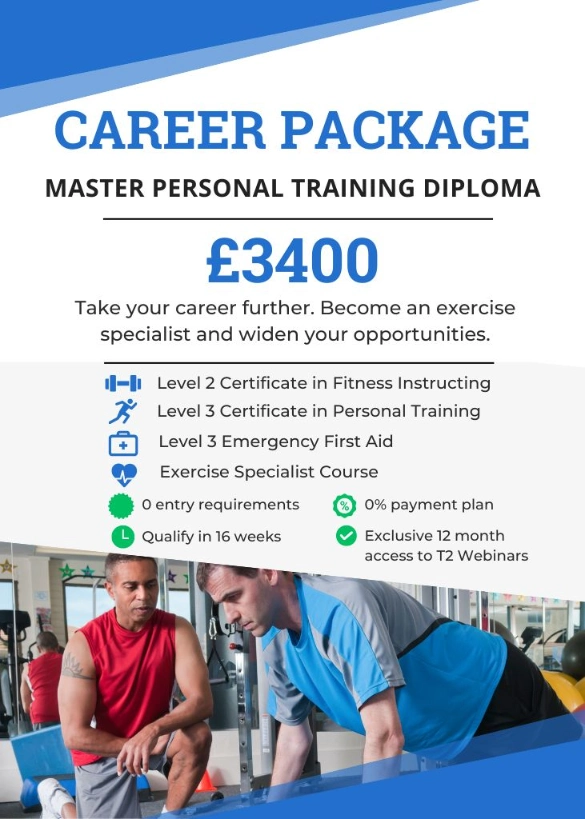
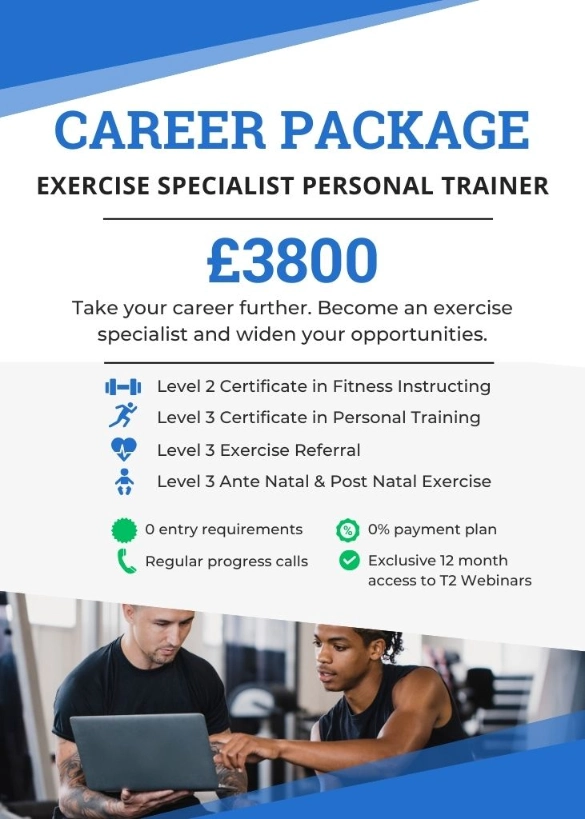
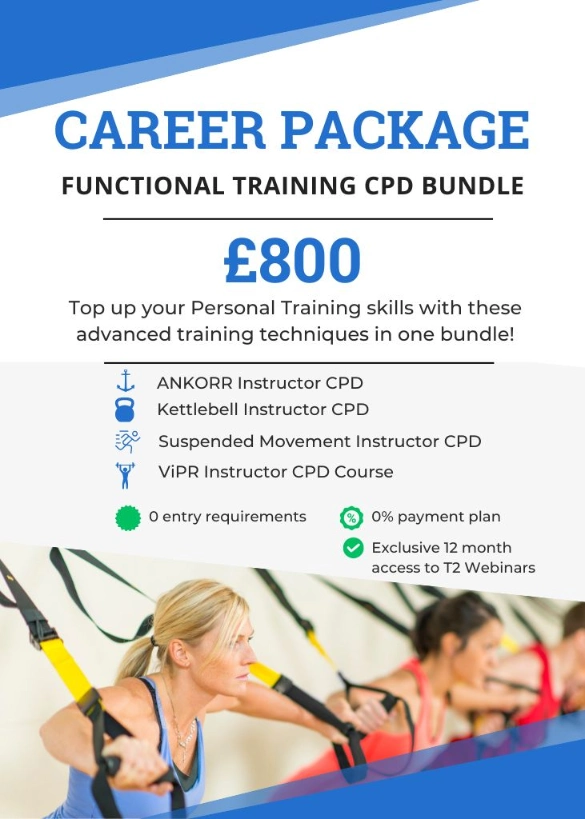
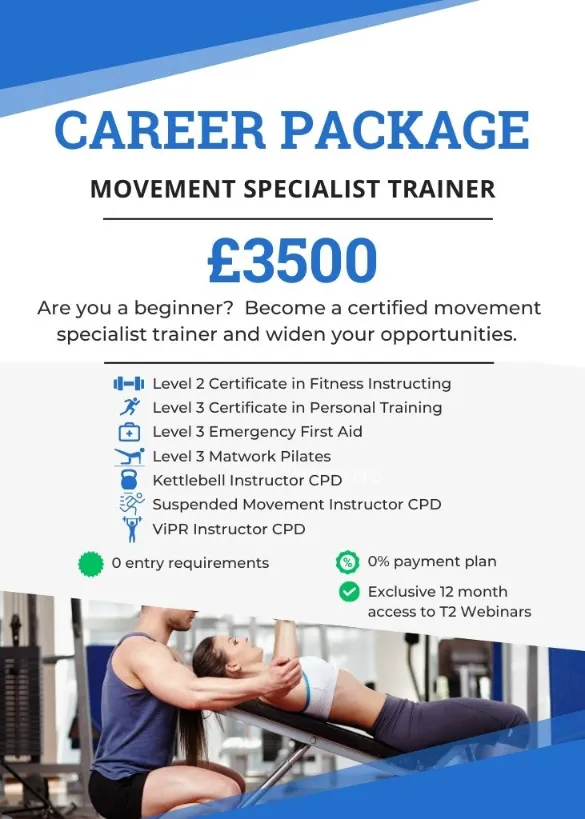
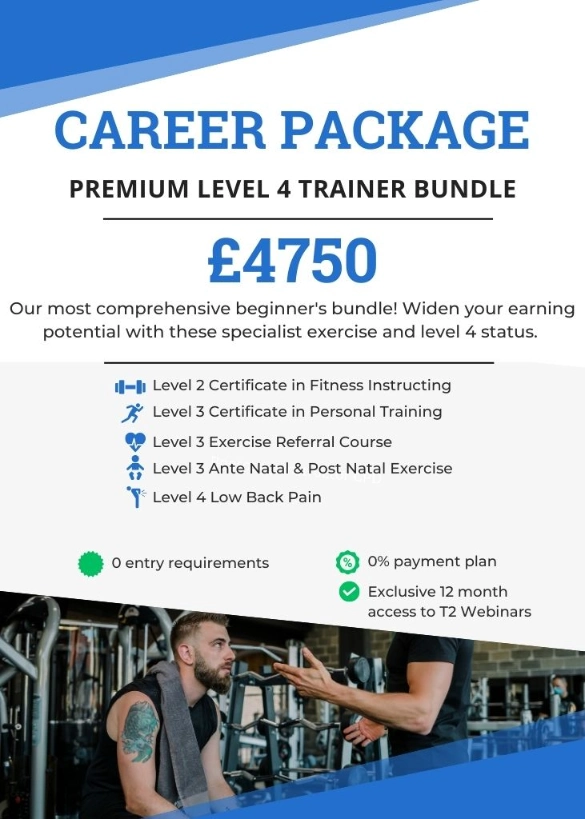
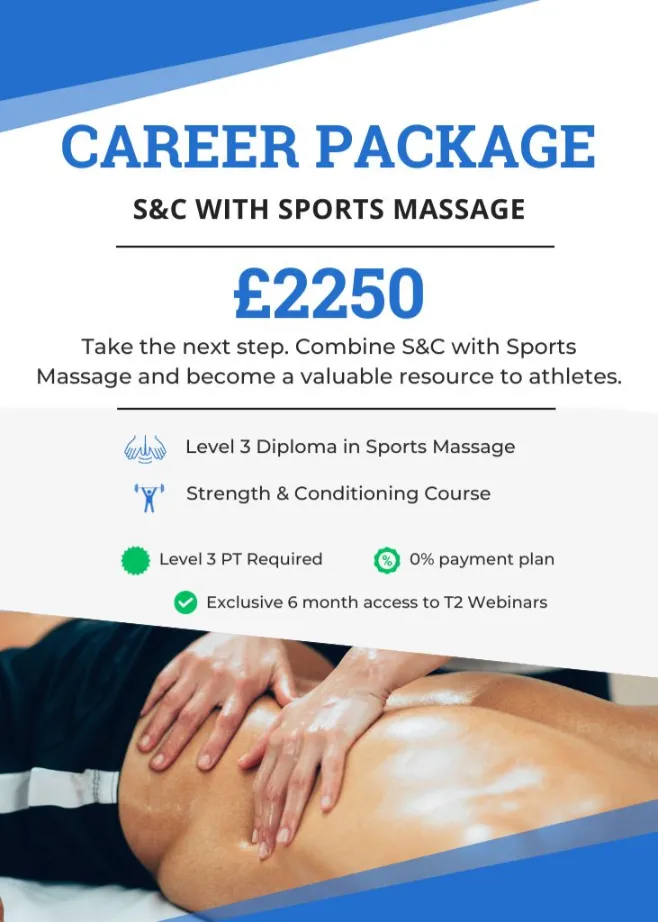
Specialising in a particular area means developing specialist knowledge and providing a more comprehensive set of skills for your clients. Because we believe in genuine progression and specialist skills we have designed a number of the career packages that help you fast-track your way into a specialist career. Our career packages consist of a complementary set of courses that work together to build specialist knowledge and skills. With specialist knowledge you’ll be able to attract clients willing to pay for a unique set of skills and understanding. Plus you’ll have the advanced know-how to achieve maximum results. We recommend:

4. Develop good attributes to make you stand out.

At T2 Fitness we go beyond helping people to qualify as Personal Trainers. Instead we provide the support and professional development to help make exceptional Personal Trainers. We do this by promoting our core values that we believe each and every fitness professional should have. These include:

5. Be Prepared To Promote Yourself

Transitioning into a new career needs careful consideration and planning. If you’re already employed by a gym it might be worth discussing your career progression in your annual review  to devise a plan. They may have a position for you once you have qualified or you may be aware of positions in other gyms that you want to apply for. 

Many of our previous students have successfully transitioned into a new career as Personal Trainers by already knowing clients that want to work with them. This is a great way of building a client base before fully committing to self-employment.

Become a Personal Trainer with T2 Fitness

Begin your PT journey with us. We’re here to support, empower and encourage you, every step of the way. 

FAQs

What qualifications do I need to become a personal trainer?

To become a qualified personal trainer you’ll need a Level 2 Gym Instructor qualification and the Level 3 Personal Trainer qualification. Both should be accredited by a nationally recognised professional body. In the UK the Fitness industry standard is CIMSPA, and your education provider should work with a credible Awarding Body, such as Focus Awards. You can read more about the different awarding bodies and accreditations in our guide.

If you study the essential qualifications full time you could qualify as a Personal Trainer with T2 Fitness within as little as 10 days face-to-face study, which is partnered with online study to supplement more of the theory work. This involves completing an accredited Level 2 Gym Instructor course along with a Level 3 Personal Trainer course. Both courses can be taken as a combined diploma at T2 Fitness which can fast track your learning and save you money along the way.

The earning potential for Personal Trainers varies depending on experience, skills, and whether you work for a gym or for yourself.The average UK salary for Personal Trainers ranges from £22,000 – £60-,000 per year. If you’re able to prove yourself as a PT then success and career progression can come quickly. Whether you work in a gym or run your own PT business then take a look at how to be a good Personal Trainer for your clients. Knowing this will guarantee professional rewards.

Essential Personal Trainer qualifications cost on average between £1650-£2400. This includes the cost of obtaining a Level 2 Gym Instructor certificate and a Level 3 Personal Training Qualification, both of which should be accredited by a nationally recognised body. Studying online or taking a diploma which combines both courses into one single diploma can help keep training costs down. However, at T2 Fitness we offer 0% finance plans, discounts on multiple booking, a 10% saving when you pay in full, and Military ELCAS courses through the MOD’s enhanced learning credit scheme.

There are a lot of training providers offering ‘the best’ personal training courses in the UK. But be wary of the providers making bold claims, like qualifying fast and guaranteeing job interviews. Ultimately, the decision of which is the best training provider will come down to personal preference and what matters to you most. 

If you want a training provider that offers genuine, personal, career-long support, taught by award-winning expert tutors, then choose a provider like T2 Fitness, with these credentials. 

Absolutely not. In fact, many people come into the fitness industry later in life and go on to build very successful careers.

One of the biggest advantages you have is life experience. Skills like communication, empathy, patience and understanding people are incredibly important as a Fitness Instructor or Personal Trainer. These attributes cannot be developed overnight.

Clients don’t just want someone who knows exercises. They want someone who can listen, support them, and guide them through challenges. That’s where your experience really counts. It’s also worth remembering that many clients are not in their twenties. They’re often looking for someone they can relate to, someone who understands their lifestyle, their pressures, and their goals.

We regularly see people changing careers, retraining, and stepping into fitness with no previous background and doing really well. What matters most isn’t your age, it’s your willingness to learn, develop your skills, and support others.

0
    0
    Your Cart
    Your cart is emptyReturn to Shop

    Got a Question About How to be Become a Personal Trainer in the UK (Guide for 2026)?

    Let us know if you’d like more information before you book and we’ll get back to you as soon as we can. 

    Career Packages advert.

    Combine Courses & Save a Bundle.

    Get certified. Propel your career. Save a bundle! Choose from our selection of ready-made course bundles or build your own. Contact us to discuss your requirements.