Over the past two decades, I’ve seen “functional training” go from a term whispered in rehab clinics to a staple phrase on gym floors and in fitness education courses we teach. But with popularity comes confusion. Is it balancing on a balance dome while pressing a kettlebell? Is it CrossFit? Or is it just another buzzword? Come and explore the myths, concepts and advantages of functional training once and for all.
Stu Gatherum, Founder & Olympic Lifting Expert at T2 Fitness

I’m Stu Gatherum, founder of T2 Fitness Education and a strength and conditioning specialist with over 20 years of hands-on experience in the fitness industry. I’ve worked across elite sport, rehab, and personal training, and everything I teach is grounded in real-world application and evidence-based practice.
Functional training isn’t just a method I use—it’s a core part of my coaching philosophy. I’ve built T2 Fitness around the idea that movement should be purposeful, adaptable, and relevant to each individual. That mindset runs through every course we offer, from our entry-level qualifications to advanced CPD. My mission is to help fitness professionals think critically, move intentionally, and deliver results with integrity.
What is Functional Training?
Let me clear things up: functional training is any exercise that improves your ability to perform daily activities with efficiency, strength, and control. It’s rooted in training movement patterns—pushing, pulling, squatting, rotating—not just isolated muscles. According to CIMSPA’s Professional Standards, functional fitness enhances performance in real-world tasks and athletic contexts by focusing on integrated, multiplanar movement and control.
At T2 Fitness, we integrate these principles into all of our CPD and diploma courses—whether you’re just starting with our Level 2 Gym Instructor qualification or going deeper with our Level 3 Personal Training Diploma.
Core Principles of Functional Training
Functional training isn’t about gimmicks. It’s about purpose. Here’s what I prioritise when building functional sessions for clients or athletes:
- Multi-joint, multi-planar movements
- Postural control and stability
- Core engagement across movement
- Transferability to life or sport
It’s not just about lifting heavy; it’s about moving better. For example, training a loaded lunge replicates movements like walking uphill or climbing stairs—skills that deteriorate with age or inactivity. And the foundation of all this? Mobility.
Without joint freedom and muscular control, functional strength has nowhere to go. That’s why I always recommend personal trainers dive deeper into mobility as part of their coaching toolkit. We’ve broken this down in our guide to The Unmatched Benefits of Mobility Training Every Personal Trainer Needs to Know. This is essential reading if you want to help clients move, feel, and perform better across all training modalities.
We emphasise these movement principles in our Stick Mobility course, which help coaches not only teach better movement but also spot inefficiencies in their clients’ biomechanics.
Let’s say I’m assessing a new client performing a simple bodyweight squat. This is one of the foundational functional patterns we assess across our T2 Fitness programmes, because it tells us so much about how a person moves.
What I Look For:
- Knees collapsing inward (valgus collapse)
- Heels lifting off the ground
- Forward torso lean
- Asymmetrical depth or hip shift
- Limited range at the ankles, hips, or thoracic spine
These are common signs of biomechanical inefficiencies often caused by restrictions. For example, tight calves or hip flexors, or weaknesses such as poor glute activation or limited core control.
How I Correct It:
- Cue and Reassess:
A simple external cue like “spread the floor with your feet” can correct knee valgus. Phrases like “Chest proud, ribs down” helps engage the trunk and keep the spine aligned. - Regress the Movement:
If the issue persists, I’ll regress to a box squat, goblet hold, or wall-supported version. This reduces load and allows me to cue more effectively without the client feeling overwhelmed.
3. Mobility & Activation Work:
Limited ankle dorsiflexion? We’ll add banded mobilisations or foam rolling to the calves.
Similarly if you detect weak glutes then bridges, monster walks, and activation drills go in before reattempting the pattern.
4. Educate & Empower:
I always explain the “why” behind the change. When clients understand the mechanics, they become more engaged and invested in moving better. Not just lifting heavier.
Functional vs Traditional Training: Clearing the Confusion
Let’s put this myth to bed: functional training does not mean you should throw out traditional lifts like squats or deadlifts. Quite the opposite—they’re foundational. The difference lies in application and intent.
For example:
- A barbell back squat might build absolute strength.
- A kettlebell goblet squat might improve ankle dorsiflexion and postural alignment.
Both are valuable. The NSCA National Strength and Conditioning Association supports this blended model, stating that optimal training programmes should mix traditional strength with functional variability to maximise transfer to sport or activity.
This approach is built into our Level 4 Strength and Conditioning course, where we teach periodisation that includes strength, functional, analysis, and mobility-based phases.
Functional Training in Different Populations
One size does not fit all in functional training. Here’s how I approach it across different client groups:
General Population:
For most people, functional training will improve energy efficiency and coordination. It will build resilience for everyday life activities like, lifting groceries and playing with kids.
Older Adults:
For older people the focus is much more about balance, body awareness, and fall prevention. To achieve this, exercises will be built around reactivity drills like stepping quickly and changing direction to maintain independence.
Athletes:
In athletes it’s all about enhancing performance. Here we’d concentrate on building explosive, sport-specific movements like rotational power for tennis or rugby. Another focus would be on building stability under load and fatigue.
Special Populations:
Working with clients recovering from injury or managing chronic conditions requires a more nuanced, informed approach. The goal is to rebuild neuromuscular patterns that may have been disrupted—starting with simplified, controlled movements before progressing to more complex actions. At T2 Fitness, we use the mantra “regress before you progress” to guide these sessions, ensuring stability and motor control are in place before increasing the challenge.
This is where understanding the why behind movement is so important. Our Level 3 Diploma Exercise Referral course dives into this by helping you work confidently with special populations and medical conditions. :
We also offer a specialist Level 4 Lower Back Pain Course, which is designed to help personal trainers assess individual client needs and develop tailored exercise interventions. It’s ideal for supporting clients dealing with chronic back pain—an area where functional training principles can have a life-changing impact.
Key Functional Training Tools & Modalities
Tools don’t make training functional—application does. That said, certain tools lend themselves better to integrated movement:
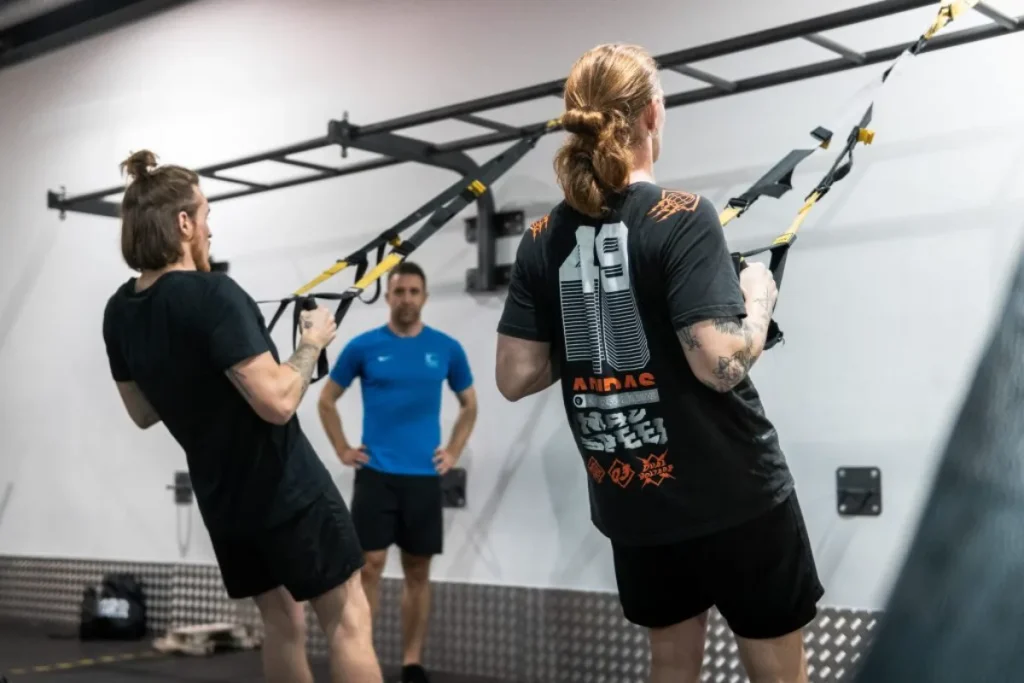
- TRX and suspension trainers: Ideal for scalable instability and core control
- Kettlebells: Encourage movement flow and dynamic control
- Medicine balls: Great for reactive and power work
- Resistance bands: Low-impact joint prep and postural correction
We incorporate these tools extensively in our CPD courses and provide specific programming frameworks so you’re not just improvising but coaching with intention.
Programming Considerations for Fitness Professionals
Before prescribing functional exercises, you’ve got to assess movement quality. I use a variety of screens (inspired by FMS and Gray Cook’s methods) to understand:
- Joint mobility
- Postural alignment
- Movement asymmetries
From there, it’s about:
- Progressing movement complexity (e.g., static to dynamic)
- Incorporating load only once control is established
- Blending functional elements into strength, cardio, or sport-specific sessions
We teach this programming philosophy throughout our diploma-level courses and advanced CPD sessions. It’s also aligned with CIMSPA’s guidelines for safe and effective programme delivery.
Evidence-Based Benefits of Functional Training
Current research supports a wide range of benefits:
- Balance & Coordination: Functional training outperforms traditional isolation work in improving proprioception (ACSM, 2022).
- Injury Prevention: Strengthening movement patterns reduces the risk of repetitive strain injuries.
- Cognitive Health: Especially in older adults, neuromuscular drills enhance cognitive processing and reaction speed.
- Sport Performance: Improved ground reaction force, core stability and muscular control (NSCA Journal, 2023).
Many of our graduates have gone on to apply these principles in elite sport and clinical environments, and we’re proud to support their ongoing development with recognised qualifications.
Common Misconceptions & Mistakes
Let’s bust a few myths I hear all the time:
- “Functional training means balancing on a wobble board.” Nope. That’s circus training, not functional training.
- “You can’t build strength with functional training.” Also false. It depends on how you load and progress the movement.
- “Functional means unstable.” Actually, functional means relevant. If the movement doesn’t apply to your client’s needs—it’s not functional.
A big part of our education at T2 Fitness is helping trainers learn to question the purpose of every exercise. That mindset alone makes your coaching more effective.
Final Thoughts: Should Functional Training Be in Every Programme?
In my opinion—yes, every programme should have elements of functional training. That doesn’t mean ditch the barbells or machines, but rather, build programmes that reflect real life and real movement. Functional training adds resilience, coordination, and purpose.
At T2 Fitness, we’re committed to training fitness professionals who think critically, move intentionally, and coach with integrity. Whether you’re just starting out or advancing into special populations or athlete development, functional training has a role to play.
Ready to deepen your skills in functional programming? Explore our T2 Fitness Courses to take the next step in your career.